
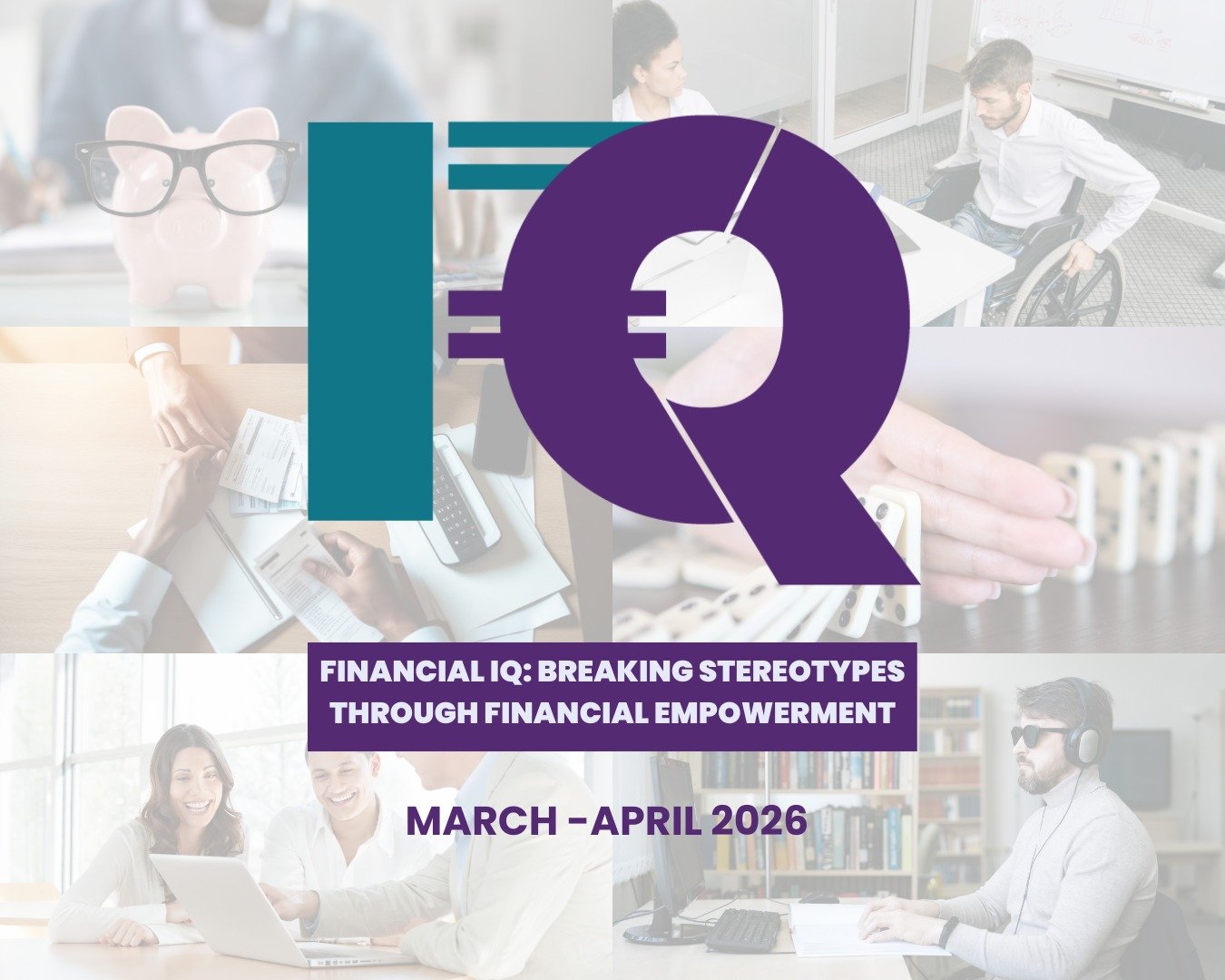
We are launching a new initiative selected under the Fund for Financial Education of the King Baudouin Foundation.
Financial IQ aims to make financial education accessible to everyone while dismantling the stereotypes that limit many people’s independence.
Why this project?
At the heart of this project lies a clear observation: financial exclusion is both structural and cultural. It is driven not only by limited access to resources, but also by societal biases and ableist beliefs about who is considered “competent” to engage with financial systems. People with disabilities are too often deprived of agency, directed toward dependence, or excluded entirely from financial discussions. The education system neglects their economic autonomy, while traditional financial institutions remain inaccessible in both format and design.
But people with disabilities are not the only ones excluded from the financial equation. Migrants, asylum seekers, and individuals facing socio‑economic vulnerability also encounter significant barriers.
Our initiative responds to these challenges by positioning financial education as a tool for empowerment, not a privilege reserved for a few.
Our approach
Financial literacy is frequently perceived as elitist and inaccessible. This initiative seeks not only to bridge these gaps but also to promote inclusion. With or without a disability, our workshops open their doors to everyone. Because inclusion should never be confused with segregation: inclusive financial literacy workshops are accessible not because they are reserved for people with disabilities, but because they welcome anyone who wishes to strengthen their financial skills. In doing so, financial education becomes not just a technical skill, but a means of empowerment and inclusion.
Our project in practice
The project offers a series of 6 interactive workshops. Each workshop combines theory, real‑life examples, and hands‑on exercises across 5 essential pillars:
1. Budgeting: planning and managing expenses
2. Saving: building financial security
3. Investment: understanding long‑term investment strategies
4. Scam Prevention: recognizing and avoiding financial fraud
5. Debt management: understanding the different types of debt and learning to plan ahead to manage debts proactively
Register here to join the workshops.